
Actually, AI detectors aren't broken. They're working
Exactly as designed
Broken. Biased. And backed by bad math.
Did you know that detectors flagged the US Constitution, the Declaration of Independence and the Bible? Fr.
Three of the most important documents in history, all marked as AI-generated. If these get flagged, what chance does your essay have?
The 1776 U.S. Declaration of Independence
When run through tools like GPTZero or ZeroGPT, it has been flagged as high as 98% to 99% AI-generated.
The US Constitution
When the U.S. Constitution is run through the industry-standard detectors (like GPTZero), it doesn't just get a "high score"—it often gets a 100% "Likely AI-Generated" rating.
The Bible (Specifically Genesis)
Several studies and YouTube tests have shown that about 66% of detectors flag the first chapter of Genesis as "likely AI.
This isn't a glitch. It's a feature. AI detectors are trained to flag clear, formal, well-structured writing.
The same writing that got these documents published. The same writing teachers ask you to write.
Actually, AI detectors aren't broken. They're working
Exactly as designed
Did you know that detectors flagged the US Constitution, the Declaration of Independence and the Bible? Fr.
Three of the most important documents in history, all marked as AI-generated. If these get flagged, what chance does your essay have?
The 1776 U.S. Declaration of Independence
When run through tools like GPTZero or ZeroGPT, it has been flagged as high as 98% to 99% AI-generated.
The US Constitution
When the U.S. Constitution is run through the industry-standard detectors (like GPTZero), it doesn't just get a "high score"—it often gets a 100% "Likely AI-Generated" rating.
The Bible (Specifically Genesis)
Several studies and YouTube tests have shown that about 66% of detectors flag the first chapter of Genesis as "likely AI.
This isn't a glitch. It's a feature.
AI detectors are trained to flag clear, formal, well-structured writing.
The same writing that got these documents published. The same writing teachers ask you to write.
STUDENTS AFFECTED GLOBALLY
FALSE POSITIVE RATE FOR ESL WRITERS
AUTHENTIC TOEFL ESSAYS FLAGGED
BLACK & MARGINALIZED STUDENTS FALSELY FLAGGED
The numbers don't lie
The detectors do
Student essays. News articles. The Constitution. AI detectors flag everything.
Your essay isn't safe. Neither is your grade.
Who’s most at risk of
Getting flagged?🚩
Some students are at much higher risk of being falsely accused. Not because they cheat.
Because of how they write.
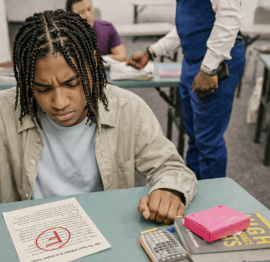
Black & Marginalized Students (3x More Likely)
Schools teach marginalized students to write perfect academic English. Turnitin flags it as AI. Result? Black students get accused nearly 3x more than their white peers.
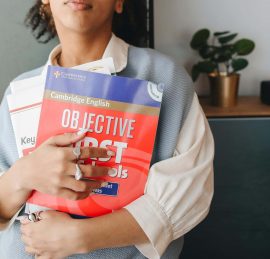
Non-Native English Speakers (61% Risk)
ESL writers use precise, formal English to be understood. Turnitin reads that clarity as "robotic" and mistakes strong grammar for AI-generated text.

High-Achieving & Neurodivergent Writers
Autistic students and highly logical writers get flagged the most because their precise, formal style reads as "machine-like" to AI.
These students deserve a tool that protects them. That's why we built False Flag Fixer.

Protect innocent students or
Catch cheaters?
When EdTech built AI detectors, they had a choice: protect innocent writers or catch cheaters at all costs. They chose the latter.
They decided a 30–50% false positive rate was acceptable. They decided students like you were worth sacrificing for the marketing claim of being "tough on cheating."
They didn't build a tool for education. They built a dragnet that treats your excellence as evidence. They don't care if you're innocent. They'd rather burn you than miss one AI user.
AI detector companies give
Zero f's about you
They market "near-perfect accuracy" while independent research proves false positive rates hit 50%. They sell to schools, not students.
Your appeal? Denied. Your explanation? Ignored. Your grade? Zero. They profit whether you're innocent or not.
Don't expect them to fix it. That's our job.
Plot twist: detectors perform
No better than coin flips
Some studies show accuracy as low as 50%. Literally random chance.
You can get flagged for being a strong writer, for English being your second language, for using words you learned in class, for your essay being too short or for literally nothing at all.
Millions of innocent students flagged every day
99% accuracy? Cap.
The numbers don't lie. The system is broken. We're here to fix it for you.
That's not a glitch. That's a coin flip. And you're the one betting your grade.
Heads you pass. Tails you're a cheater. Great odds, right?
We don't sell fear. We sell facts. And the facts say detectors are broken.
- Stanford University Department of Computer Science (2023). "GPT Detectors Are Biased Against Non-Native English Writers."
- The Washington Post (2023). Multiple investigations into AI detector reliability.
- University of Maryland / University of Chicago research on false positive rates.
- Turnitin transparency reports (2023-2025).
Researchers proved they don't work
Universities are switching off
University of Pittsburgh
Disabled Turnitin's AI detection entirely. Said it's "not yet reliable enough to be deployed without substantial risk of false positives.
University of Cape Town
Officially scrapped AI detectors October 2025. Their director: "AI detectors are simply not reliable. There are no magic solutions.
Yale, MIT, Vanderbilt
All moved away from these tools. They know it's broken. The world's most prestigious universities don't trust AI detectors. Neither should your professor.
The schools that
Disabled AI detection
| University | Action | Date |
|---|---|---|
| MIT | Official guidance states: "AI Detectors Don't Work" | — |
| Yale University | Moved away from AI detection tools entirely | — |
| Vanderbilt University | Disabled Turnitin's AI detector. Cited false accusations and lack of transparency. | 2023–24 |
| University of Pittsburgh | "Not yet reliable enough to be deployed without substantial risk of false positives." | 2023 |
| Washington State University | Terminated Turnitin contract entirely. AI detection no longer used. | Feb 2026 |
| University of Cape Town | "AI detectors are simply not reliable. There are no magic solutions." | Oct 2025 |
| Curtin University | Disabled AI detection feature entirely. | Jan 2026 |
| University of Waterloo | Turnitin AI detection tool discontinued. | Fall 2025 |
| University of Arizona | Disabled AI detection due to reliability concerns and false positives. | Feb 2026 |
The problem? Thousands of schools, colleges, and universities around the world are still trusting AI detectors. Bet your school is one of them.
That's literally why
False Flag Fixer™ exists
The world's most prestigious universities don't trust AI detectors. Neither should your professor. Neither should you.
Don't wait for your school to catch up. Protect your work now.
We can't fix the detector. But we can fix your essay before the detector sees it.
They have an algorithm to catch you. Now you have an algorithm to protect yourself.

False Flag Fixer™ is a predictive pre-check tool designed to help students identify potential false AI detection flags before submission. Built by a lawyer and former English comprehension lecturer to give students a real defense against broken AI detectors. Not affiliated with Turnitin®.
Get the tea before your prof does 🚩
Get notified when we launch new features—Chrome extension, mobile app, and more. No spam, just updates.
We aim to protect authentic work in a flawed system.
While any editing tool can be misused, we provide transparency and education to promote integrity, not undermine it.
False Flag Fixer is not affiliated with or endorsed by Turnitin or any AI detection service.
© Copyright 2026 l Don't Turn It In Yet l False Flag Fixer All rights reserved.